Zaha Hadid: Bergisel Ski Jump
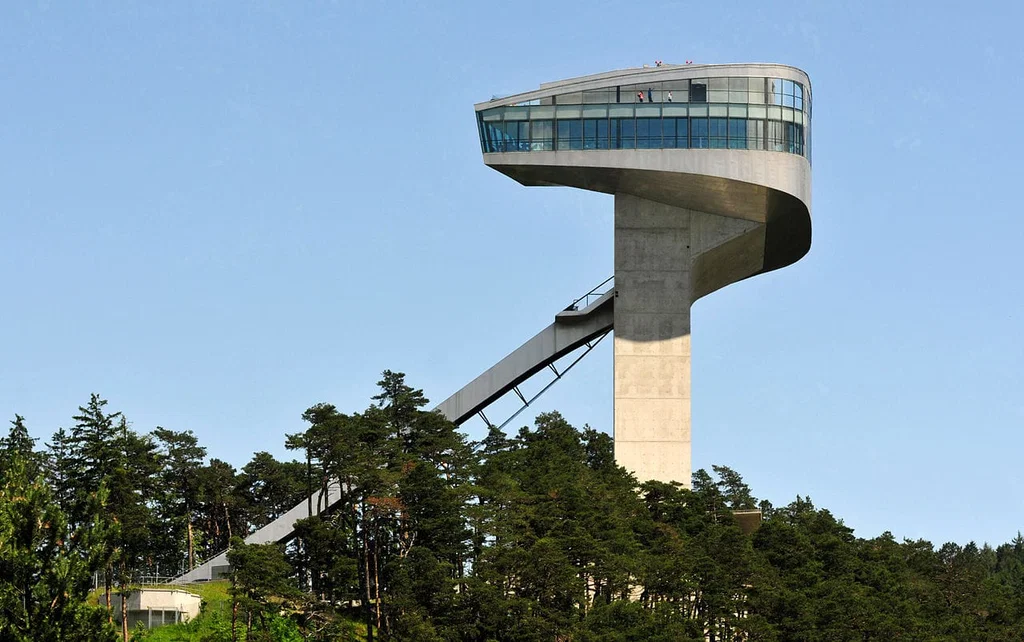
In this HENI Talks film, legendary Danish architect Bjarke Ingels (founder of BIG) explores the radical genius of Zaha Hadid’s iconic Bergisel Ski Jump in Innsbruck, Austria.
In the early 1990s, Hadid was known primarily as a "paper architect"—famous for abstract, multi-perspective paintings that critics claimed were structurally impossible to build. But on an alpine mountain peak, she turned fiction into fact. Casting her wildest imagination into concrete and steel, she built a gravity-defying masterpiece with the effortless elegance of a single brushstroke.
Bjarke Ingels dissects how Hadid conquered brutal engineering, gravity, and bureaucracy to create a true piece of "social infrastructure" that permanently redefined what is possible in modern architecture.
Time Period:
21st century
Bjarke Ingels is the founder of BIG. His work is driven by the belief that architecture can be a tool for turning fiction into fact - merging pragmatic solutions with utopian possibilities.
Since founding BIG in 2005, Ingels has led projects that redefine typologies and challenge conventional constraints. From the figure-eight loop of 8 House in Copenhagen, to the hybrid pyramid-courtyard of VIA 57 West in Manhattan, to the skiable waste-to-energy plant CopenHill, his work proposes that sustainable cities can not only be better for the environment, but also more enjoyable to live in.
BIG’s portfolio includes global collaborations with companies like Google, LEGO, and Toyota, as well as public projects such as the Smithsonian Master Plan, the Prague Philharmonic - a cultural landmark for music in motion - and Zurich Airport, the world’s largest timber building, redefining both scale and sustainability in aviation architecture. Across all scales, Ingels advocates for hedonistic sustainability, an approach where ecological responsibility and human enjoyment are not at odds, but mutually reinforcing.
He has taught at Harvard, Yale, and Columbia, and is the author of Yes Is More, a graphic monograph on BIG’s design philosophy. His recognitions include the Knight’s Cross of the Order of the Dannebrog (Denmark), Chevalier de l’Ordre des Arts et des Lettres (France), the French National Grand Prix for Architecture (Grande Médaille d’Or), the Golden Lion at the Venice Biennale, the Louis I. Kahn Award, and the Aga Khan Award for Architecture, as well as being named one of TIME’s 100 Most Influential People.
Watch more
Watch more

04:47
Zaha Hadid: The Serpentine North Gallery
In this film, Obrist steps inside one of Zaha Hadid’s most striking architectural achievements—the Serpentine North Gallery. Known for its sharp geometries, dramatic interior lines, and signature fluidity, this building reflects Zaha Hadid's pioneering approach to architecture. Designed in 2013, the gallery was Hadid’s first permanent building in London and a powerful example of her later work—unapologetically bold and sculptural. Join HENI Talks as we explore the story behind this architectural masterpiece, its design principles, and its lasting influence on contemporary architecture.

05:07
Zaha Hadid: Investcorp Building
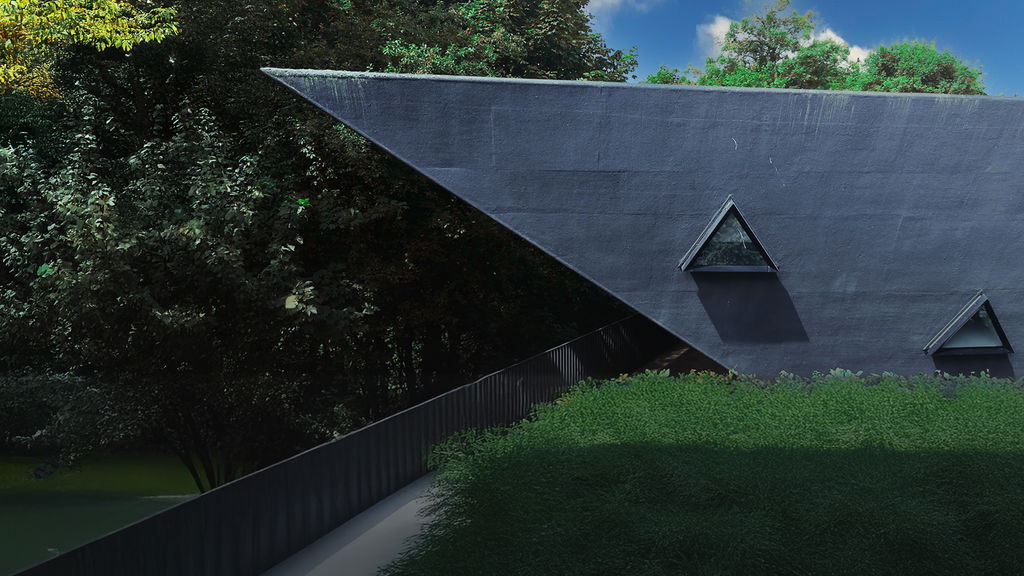
In this film, Dr. Eugene Rogan, Professor of Modern Middle Eastern History at the University of Oxford, explores Zaha Hadid's architectural masterpiece: the Investcorp Building at St Antony's College. Discover how Hadid's innovative design seamlessly integrates modernity with Oxford's historic fabric, and how its sinuous stainless-steel form unites disparate Victorian structures while also respecting the surrounding landscape, even curving around a century-old sequoia. Completed in 2015, this building now serves as the Middle East Centre, housing state-of-the-art facilities including a 117-seat lecture theatre, library, and archive spaces. Through Dr. Eugene Rogan's expert insights, this film reveals the challenges and triumphs of introducing contemporary architecture to Oxford's traditional setting.
04:40
Zaha Hadid: Maggie's Centre
This film explores the architecture of Zaha Hadid through the breathtaking Maggie’s Centre. Step inside a sanctuary shaped by Hadid’s signature fluid forms and discover how her innovative use of space creates a calming, uplifting environment for patients and visitors alike. Whether you're passionate about architecture, design, or the transformative power of art in healing spaces, this is a must-watch.In this film on The Architecture of Zaha Hadid, you are invited to step inside the breathtaking Maggie’s Centre, to discover how Hadid's signature fluid forms and innovative use of space create a soothing haven for patients and visitors alike.
04:47
Zaha Hadid: The Serpentine North Gallery
In this film, Obrist steps inside one of Zaha Hadid’s most striking architectural achievements—the Serpentine North Gallery. Known for its sharp geometries, dramatic interior lines, and signature fluidity, this building reflects Zaha Hadid's pioneering approach to architecture. Designed in 2013, the gallery was Hadid’s first permanent building in London and a powerful example of her later work—unapologetically bold and sculptural. Join HENI Talks as we explore the story behind this architectural masterpiece, its design principles, and its lasting influence on contemporary architecture.
05:07
Zaha Hadid: Investcorp Building
In this film, Dr. Eugene Rogan, Professor of Modern Middle Eastern History at the University of Oxford, explores Zaha Hadid's architectural masterpiece: the Investcorp Building at St Antony's College. Discover how Hadid's innovative design seamlessly integrates modernity with Oxford's historic fabric, and how its sinuous stainless-steel form unites disparate Victorian structures while also respecting the surrounding landscape, even curving around a century-old sequoia. Completed in 2015, this building now serves as the Middle East Centre, housing state-of-the-art facilities including a 117-seat lecture theatre, library, and archive spaces. Through Dr. Eugene Rogan's expert insights, this film reveals the challenges and triumphs of introducing contemporary architecture to Oxford's traditional setting.
04:40
Zaha Hadid: Maggie's Centre
This film explores the architecture of Zaha Hadid through the breathtaking Maggie’s Centre. Step inside a sanctuary shaped by Hadid’s signature fluid forms and discover how her innovative use of space creates a calming, uplifting environment for patients and visitors alike. Whether you're passionate about architecture, design, or the transformative power of art in healing spaces, this is a must-watch.In this film on The Architecture of Zaha Hadid, you are invited to step inside the breathtaking Maggie’s Centre, to discover how Hadid's signature fluid forms and innovative use of space create a soothing haven for patients and visitors alike.
08:05
Zaha Hadid: MAXXI Museum of Modern and Contemporary Architecture
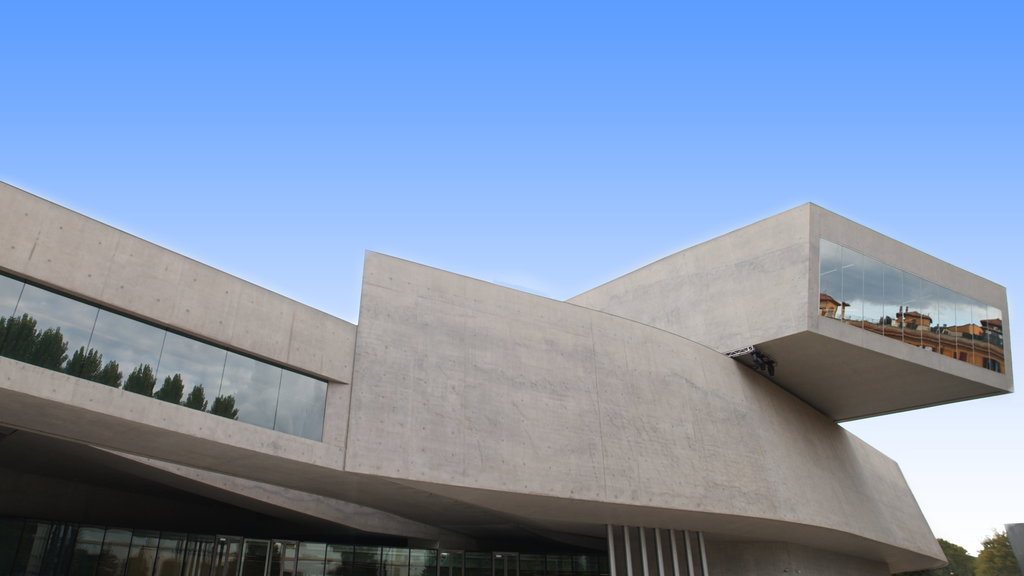
Explore Zaha Hadid’s vision for MAXXI’s Museum of Modern and Contemporary Architecture (1989-2009) in Rome. Architect Margherita Guccione, director of MAXXI’s Museum of Modern and Contemporary Architecture, reflects on Hadid’s innovative use of swooping curves, impossible angles and haunting views. Flow and drift are key concepts to the building’s design, with its dynamic, linear form echoing the streets outside and reflecting Hadid’s interest in integrating her buildings within their urban context while revitalising an existing site in the metropolis. At the same time, the organic design creates open-ended encounters with the contemporary art exhibited inside the museum.
50:10
Architect Sir Peter Cook On A Lifetime Of Drawing
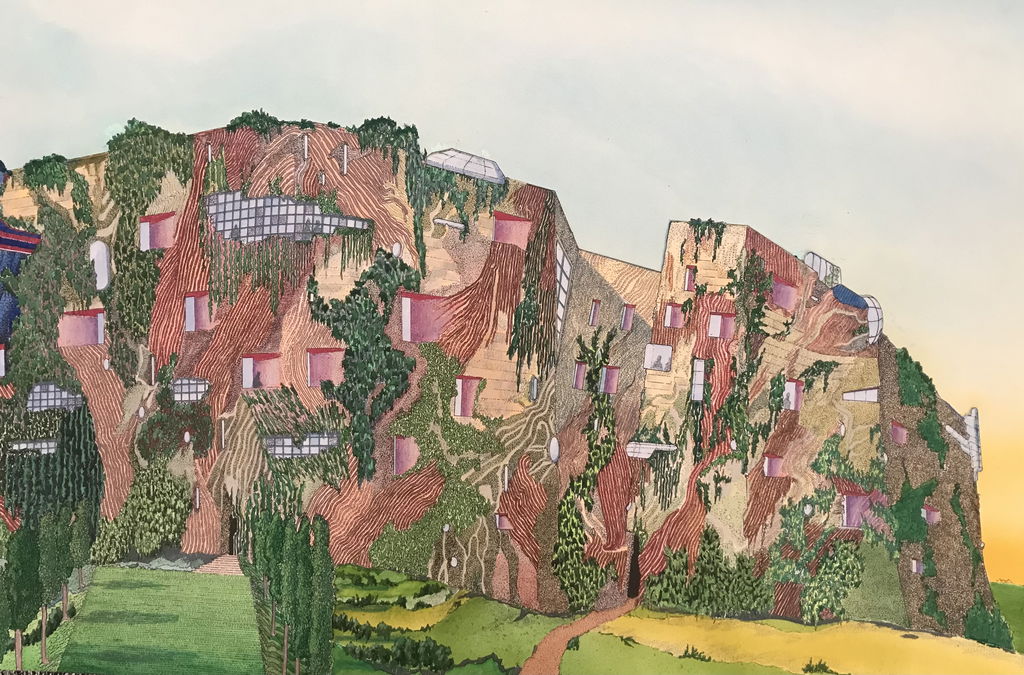
In this HENI Talks film, we dive into the imaginative world of Sir Peter Cook's drawings, a pioneering British architect and co-founder of the avant-garde group, Archigram in conversation with Hans Ulrich Obrist. Renowned for his radical re-imaginings of urban landscapes, Cook’s vibrant artworks offer a window into cities of the future, blending architectural precision with artistic flair. With a career spanning over six decades, Sir Peter Cook (b. 1936) has been instrumental in challenging conventional architectural norms. His work, characterised by bold colours and dynamic forms, envisions cities that are both functional and fantastical. Beyond his architectural achievements, Cook’s paintings stand as independent artworks, which are celebrated worldwide.
6:18
Zaha Hadid: Zaragoza Pavilion
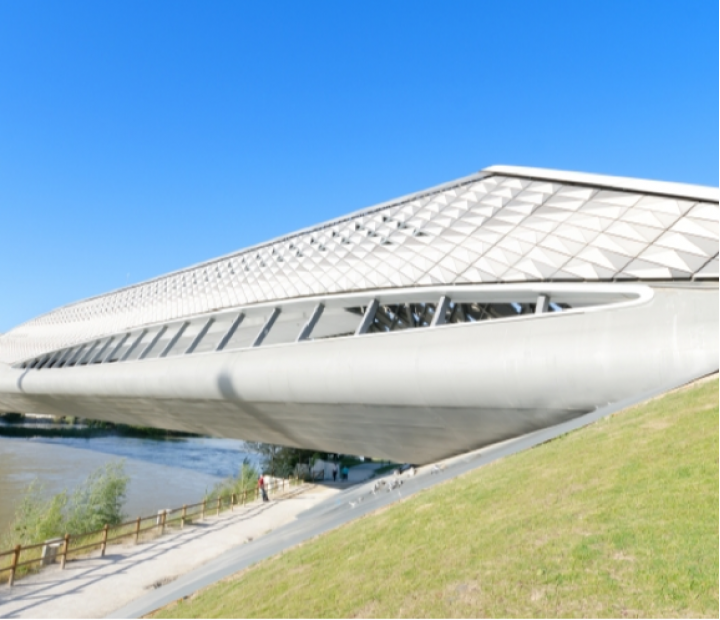
Bold, fluid, and futuristic, Zaha Hadid’s Zaragoza Pavilion for the 2008 Expo in Spain remains one of the most daring expressions of her architectural imagination. Designed as both a bridge and a building, it embodies Hadid’s lifelong fascination with form, flow, and movement and a visitor attraction when coming to Zaragoza. The Pabellón Puente, a futuristic, gladiolus-shaped bridge designed by Zaha Hadid, serves as both a pedestrian crossing over the Ebro River and home to the Mobility City exhibition, showcasing innovations in sustainable transport. It's a striking architectural landmark and one of the main symbols of the 2008 Zaragoza Expo. In this HENI Talks short film, Luis Fernández-Galiano, Professor at the School of Architecture of Universidad Politécnica of Madrid and Director of the “AV/Arquitectura Viva” magazine. explores how the pavilion captures Hadid’s radical approach to architecture — merging engineering with emotion, and structure with sculpture.
6:18
Zaha Hadid: BMW Central Building
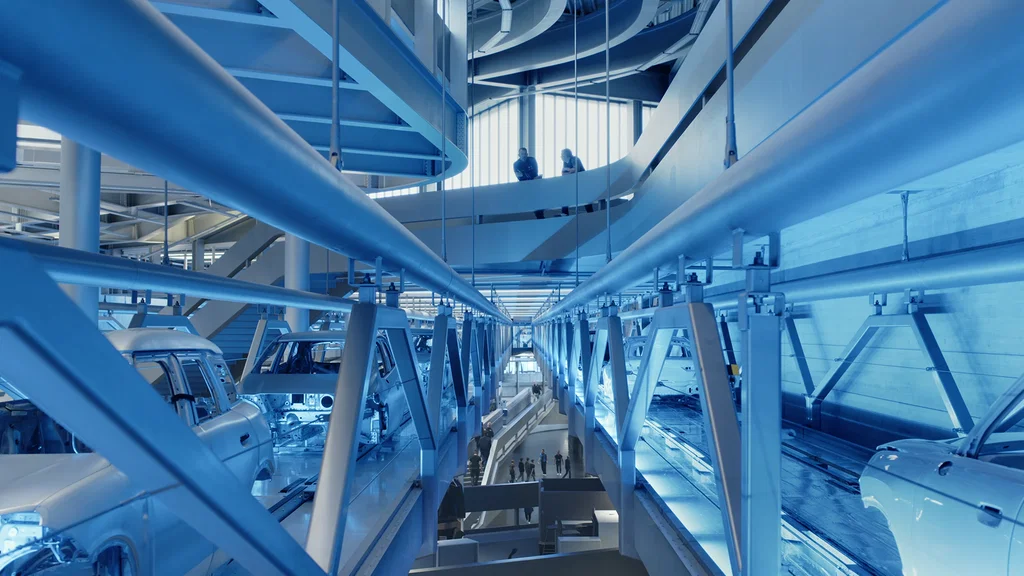
Renowned Architect Amanda Levete takes us inside a space that redefined the modern workplace, and analyses one of Zaha Hadid’s most groundbreaking yet underappreciated masterworks: the BMW Central Building in Leipzig, Germany. Hadid flipped the traditional corporate structure on its head by moving unfinished cars directly above the office desks. In this HENI Talks exclusive, Levete explains how this blend of industrial grit and corporate strategy created a new blueprint for workplace transparency that still challenges architects today., Zaha Hadid didn’t just design a factory for BMW; she engineered a physical collision between blue-collar grit and corporate strategy.
3:48
Zaha Hadid: Ordrupgaard Extension
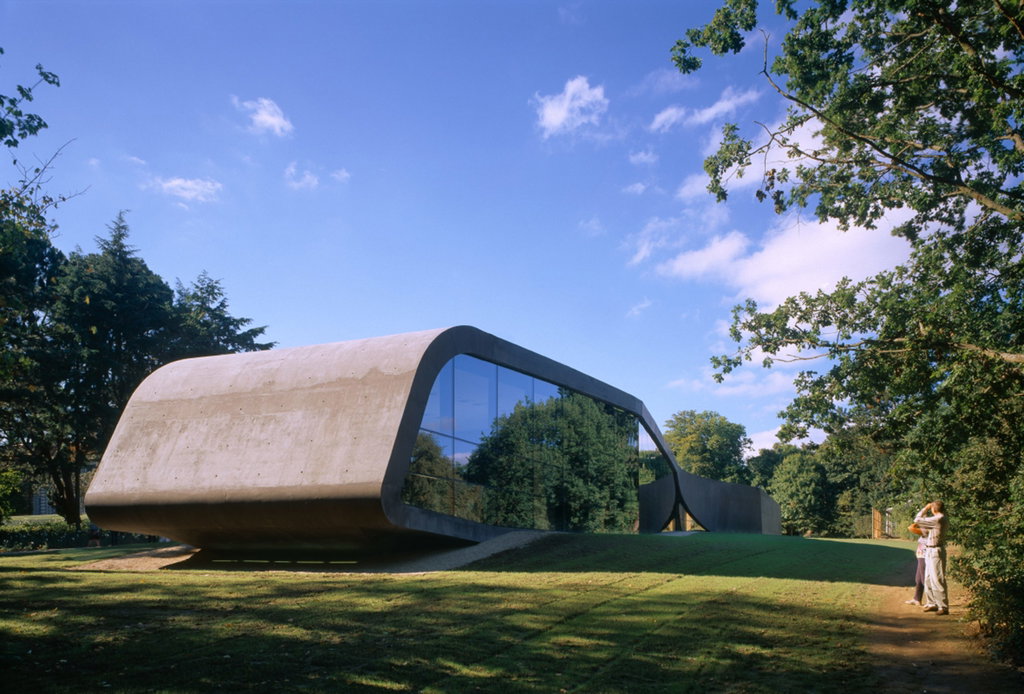
In this exclusive film, HENI Talks is joined by Gertrud Oelsner, the Director of the Ordrupgaard Museum in Copenhagen, Denmark, to explore the building's radical 2005 extension.
6:31
Zaha Hadid: Bergisel Ski Jump
In this HENI Talks film, legendary Danish architect Bjarke Ingels (founder of BIG) explores the radical genius of Zaha Hadid’s iconic Bergisel Ski Jump in Innsbruck, Austria.