Zaha Hadid: Ordrupgaard Extension
In this exclusive film, HENI Talks is joined by Gertrud Oelsner, the Director of the Ordrupgaard Museum in Copenhagen, Denmark, to explore the building's radical 2005 extension.
Known for her revolutionary "parametric" curves, Zaha Hadid designed this striking black-toned concrete extension to house the museum's world-class French Impressionist collection. But instead of creating a traditional, static "white cube" gallery, Hadid subverted the rules of museum architecture entirely—crafting a fluid, subterranean landscape where floor, wall, and ceiling blur into one.
From the tactile self-compacting concrete to the glass pavilions that flood the historic 1918 parkland into the gallery, Director Gertrud Oelsner walks us through the building's design secrets and explains how Hadid permanently changed how we experience museum architecture.
Watch more
Watch more

12:53
Zaha Hadid: Sketching the Future
Hans Ulrich Obrist traces how Zaha Hadid’s futuristic architecture evolved from ‘superfluid’ sketches.

07:22
Zaha Hadid: Vitra Fire Station
Rolf Fehlbaum, chairman emeritus of Vitra, discusses the visionary design of Zaha Hadid’s Vitra Fire Station, one of her most iconic early works. Completed in 1993, this groundbreaking building in Weil am Rhein, Germany, defies conventional architectural forms with its sculptural forms, sharp angles, and dramatic use of concrete. Redefining architectural boundaries, the Vitra Fire Station was Hadid’s first constructed project, marking a pivotal moment in her career and influencing generations of architects to come.
05:43
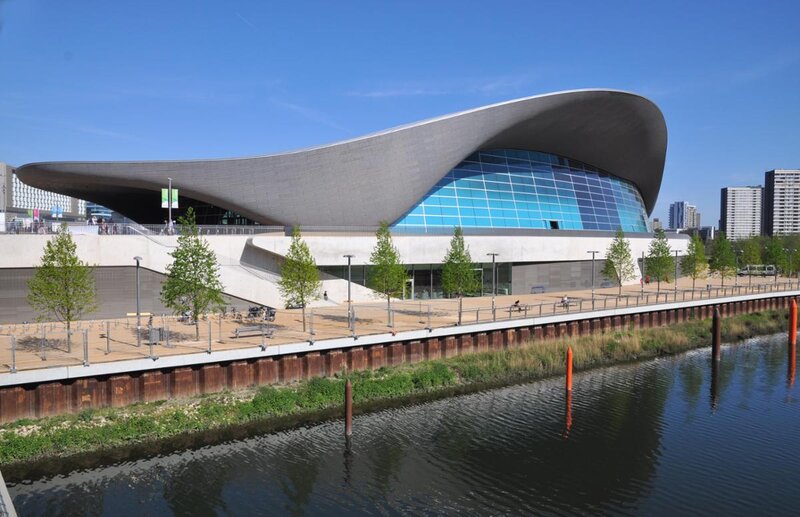
Zaha Hadid: Olympic Swimming Pool
Deyan Sudjic, Director Emeritus of The Design Museum, London discovers the breathtaking London Aquatics Centre in Stratford, London, designed by the legendary architect Zaha Hadid. Known for her futuristic, fluid forms and innovative structures, Hadid’s work transforms ordinary spaces into extraordinary experiences. Hadid won an architectural competition with her visionary design for the Olympic swimming pool for the London 2012 Olympics. This iconic venue is a true masterpiece of design, blending elegance, functionality, and cutting-edge architecture.
12:53
Zaha Hadid: Sketching the Future
Hans Ulrich Obrist traces how Zaha Hadid’s futuristic architecture evolved from ‘superfluid’ sketches.
07:22
Zaha Hadid: Vitra Fire Station
Rolf Fehlbaum, chairman emeritus of Vitra, discusses the visionary design of Zaha Hadid’s Vitra Fire Station, one of her most iconic early works. Completed in 1993, this groundbreaking building in Weil am Rhein, Germany, defies conventional architectural forms with its sculptural forms, sharp angles, and dramatic use of concrete. Redefining architectural boundaries, the Vitra Fire Station was Hadid’s first constructed project, marking a pivotal moment in her career and influencing generations of architects to come.
05:43
Zaha Hadid: Olympic Swimming Pool
Deyan Sudjic, Director Emeritus of The Design Museum, London discovers the breathtaking London Aquatics Centre in Stratford, London, designed by the legendary architect Zaha Hadid. Known for her futuristic, fluid forms and innovative structures, Hadid’s work transforms ordinary spaces into extraordinary experiences. Hadid won an architectural competition with her visionary design for the Olympic swimming pool for the London 2012 Olympics. This iconic venue is a true masterpiece of design, blending elegance, functionality, and cutting-edge architecture.

04:47
Zaha Hadid: The Serpentine North Gallery
In this film, Obrist steps inside one of Zaha Hadid’s most striking architectural achievements—the Serpentine North Gallery. Known for its sharp geometries, dramatic interior lines, and signature fluidity, this building reflects Zaha Hadid's pioneering approach to architecture. Designed in 2013, the gallery was Hadid’s first permanent building in London and a powerful example of her later work—unapologetically bold and sculptural. Join HENI Talks as we explore the story behind this architectural masterpiece, its design principles, and its lasting influence on contemporary architecture.

05:07
Zaha Hadid: Investcorp Building
In this film, Dr. Eugene Rogan, Professor of Modern Middle Eastern History at the University of Oxford, explores Zaha Hadid's architectural masterpiece: the Investcorp Building at St Antony's College. Discover how Hadid's innovative design seamlessly integrates modernity with Oxford's historic fabric, and how its sinuous stainless-steel form unites disparate Victorian structures while also respecting the surrounding landscape, even curving around a century-old sequoia. Completed in 2015, this building now serves as the Middle East Centre, housing state-of-the-art facilities including a 117-seat lecture theatre, library, and archive spaces. Through Dr. Eugene Rogan's expert insights, this film reveals the challenges and triumphs of introducing contemporary architecture to Oxford's traditional setting.