Shepard Fairey: Why Protest Art Belongs Everywhere
"There's a lot of debate about where protest art should live. My opinion is that it should live everywhere."
In this definitive monologue essay, legendary contemporary street artist and designer Shepard Fairey (the creative force behind OBEY Giant) traces his journey from a punk-rock-obsessed teenager to one of the most influential political artists of the 21st century.
From the viral, mischievous rise of his 1989 'Andre the Giant has a Posse' sticker to the global impact of the Barack Obama 'Hope' poster and the 'We the People' series, Fairey explores how art serves as an essential counter-argument to the dominant culture.
He delves deep into his early artistic influences—from the raw energy of the Reagan-Thatcher era and punk flyers to Barbara Kruger, Russian Constructivism, and Heidegger’s theory of phenomenology. Beyond the gallery walls, he reflects honestly on the physical dangers of his work, detailing his 18 arrests, police clashes, and his lifelong commitment to standing up and speaking out.
Discover the history, the mechanics, and the philosophy of an artist who believes that if something is worth saying, it's worth saying with style.
Themes:
Shepard Fairey is a contemporary street artist, graphic designer, activist, and founder of OBEY Clothing and creative agency Studio Number One. In 1989, while at Rhode Island School of Design studying for his Bachelor of Fine Arts in Illustration, Shepard Fairey created the “Andre the Giant has a Posse” sticker that later evolved into the OBEY GIANT art campaign. In 2008, his portrait of then-Democratic candidate Barack Obama became an internationally recognized emblem of hope. He is known for the “We The People” campaign debuted during the 2017 Women’s Marches worldwide. Fairey has painted nearly 140 public murals, become one of the most sought-after and provocative artists globally, changing the way people converse about art and view the urban landscape.
Watch more
Watch more
38:18
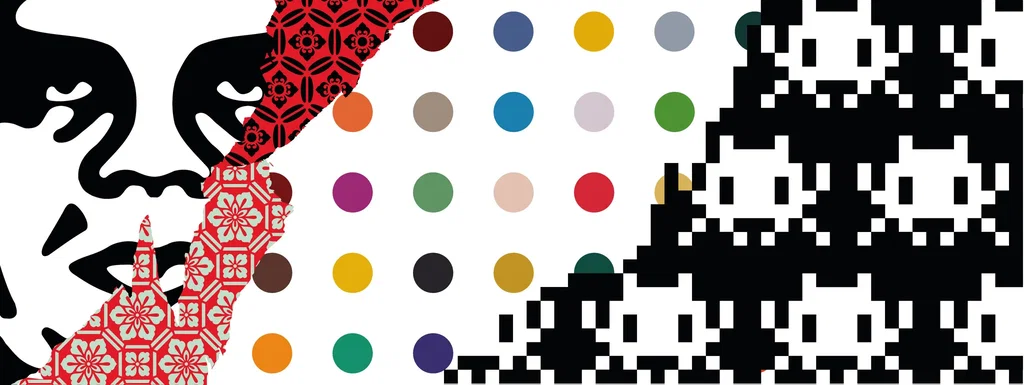
Damien Hirst, Shepard Fairey & Invader: The Making of Triple Trouble
What happens when three of the world’s most iconic artists—Damien Hirst, Shepard Fairey, and Invader—combine their legendary styles? Go behind the scenes of 'Triple Trouble' to see the chaos, the trust, and the process behind their collaboration. In this exclusive HENI Talk, Damien Hirst, Shepard Fairey, and Invader (Space Invader) discuss the evolution of their three-way collaboration. From putting an Invader in a formaldehyde tank to melding the "Make Art Not War" iconography with intricate butterfly mandalas, the artists reveal the "relentless experimentation" required to find harmony on the edge of chaos.

5:20
Master of Realism: Jan van Eyck’s Arnolfini Portrait
Martin Gayford presents some of the mysteries behind one of art history’s most recognisable paintings: The Arnolfini Portrait.

11:57
Jean-Michel Basquiat: Post-Punk Prodigy
How did the artist Jean-Michel Basquiat anticipate our experience of the digital?
38:18
Damien Hirst, Shepard Fairey & Invader: The Making of Triple Trouble
What happens when three of the world’s most iconic artists—Damien Hirst, Shepard Fairey, and Invader—combine their legendary styles? Go behind the scenes of 'Triple Trouble' to see the chaos, the trust, and the process behind their collaboration. In this exclusive HENI Talk, Damien Hirst, Shepard Fairey, and Invader (Space Invader) discuss the evolution of their three-way collaboration. From putting an Invader in a formaldehyde tank to melding the "Make Art Not War" iconography with intricate butterfly mandalas, the artists reveal the "relentless experimentation" required to find harmony on the edge of chaos.
5:20
Master of Realism: Jan van Eyck’s Arnolfini Portrait
Martin Gayford presents some of the mysteries behind one of art history’s most recognisable paintings: The Arnolfini Portrait.
11:57
Jean-Michel Basquiat: Post-Punk Prodigy
How did the artist Jean-Michel Basquiat anticipate our experience of the digital?

1:16
1 Minute 1 Work: The Sake-drinking Boy
Shantell Martin shares her admiration for Hishikawa Moronobu’s inspiring use of line.

12:15
Bridget Riley: The Art of Perception
Discover the origins and evolution of Bridget Riley’s spectacular practice.

12:50
Paula Rego: Giving Fear a Face
From the personal to the political, every picture tells her story.