The First Pot
What was the first piece of pottery that humans ever made? What does it reveal about our earliest ancestors? In this episode Paul Greenhalgh and Stephanie Rozene travel back to pre-historic civilisation to find out how humans created the very first ceramic objects and what that meant to the story of mankind.
Ceramics and artwork in this week’s episode include:
Venus of Dolní Věstonice, 29,000—25,000 BC Vestonicka venuse edit by Petr Novák, Wikipedia Source - https://commons.wikimedia.org/wiki/File:Vestonicka_venuse_edit.jpg For the full legal code, see the Creative Commons Attribution-ShareAlike 2.5 Generic license. https://creativecommons.org/licenses/by-sa/2.5/legalcode.en
Vestonicka venuse back by Petr Novák, Wikipedia Source - https://commons.wikimedia.org/wiki/File:Vestonicka_venuse_back.jpg For the full legal code, see the Creative Commons Attribution-ShareAlike 2.5 Generic license. https://creativecommons.org/licenses/by-sa/2.5/legalcode.en
Fire-Flame Cooking Vessel, 2750—2500 BC
Deep Vessel with Decorative Handles, 3500—2500 BC Met Museum
Bell Beaker, 2475–1800 BC Bell Beaker Rijksmuseum of Oudheden by Gary Todd Source - https://commons.wikimedia.org/wiki/File:Bell_Beaker_Rijksmuseum_of_Oudheden.jpg For the full legal code, see the Creative Commons Attribution ShareAlike 3.0 Unported https://creativecommons.org/licenses/by-sa/3.0/deed.en
To see images of the ceramics in this episode go to www.heni.com/thehistoryofceramics or visit the Heni Talks YouTube channel: www.youtube.com/HENITalks
Professor Paul Greenhalgh is a specialist on the art and design of the Modern period. He has written widely on Art Nouveau and curated several exhibitions including the major survey Art Nouveau 1890-1914, which toured internationally (2000-01). His books include Ephemeral Vistas (1988), Modernism in Design (1990), Art Nouveau 1890–1914 (2000), The Modern Ideal (2005), Fair World (2011), L’Art Nouveau: La Revolution Decorative (2013), Ceramic Art and Civilisation (2021) and Pablo Picasso: The Legacy of Youth (2022). He has held positions as Head of Research at the V&A Museum, London; President and Director at the Corcoran Gallery of Art, Washington DC; Director of the Sainsbury Centre, Norwich; and Inaugural Director of the Zaha Hadid Foundation, London. He was born and raised in Bolton, and is a proud Lancastrian.
Stephanie Rozene is a ceramic artist, Professor of Art, and the Ceramics Program Coordinator at Hartwick College in Oneonta, New York she has been teaching, writing and making art since 2004. At Hartwick she's been honored with the Wandersee Scholar in Residence award twice, along with the Teacher Scholar Award. Stephanie's research uses historical ornament and porcelain as a visual language to critique contemporary political rhetoric, and she also explores the history of clay as a cooking tool. Her work has been shown extensively both nationally and internationally. She is a member of the International Academy of Ceramics and is the Vice President of the board of trustees for the Watershed Center for Ceramic Arts in Newcastle, Maine, and was educated at NSCAD University in Nova Scotia, Canada and the New York State College of Ceramics at Alfred University.
More episodes
More episodes
57.36
Adelaide Alsop Robineau - The Pioneering Potter
In this episode Paul Greenhalgh and Stephanie Rozene discuss the life and work of Adelaide Alsop Robineau who made the Mona Lisa of American ceramics – the Scarab Vase – that was later stolen in an audacious art heist.
35.42
Picasso The Potter
In this episode Paul Greenhalgh and Stephanie Rozene discuss the period of Picasso’s life when he became a potter, in a combination of painting and sculpture that transformed ceramics.
38.44
The Ceramic Wars
In this episode Paul Greenhalgh and Stephanie Rozene travel to East Asia, to explore the complicated relations between Korea and Japan in the 16th and 17th centuries, and how this played out in the world of ceramics.
51:34
Josiah Wedgwood - Part 1
In the next two episodes Paul Greenhalgh is joined by Sir Tristram Hunt as they travel back to 18th century England and the life and work of Josiah Wedgwood - potter, scientist and abolitionist and creator of one of the most famous ceramic companies in British history.
View episode
1.04.20
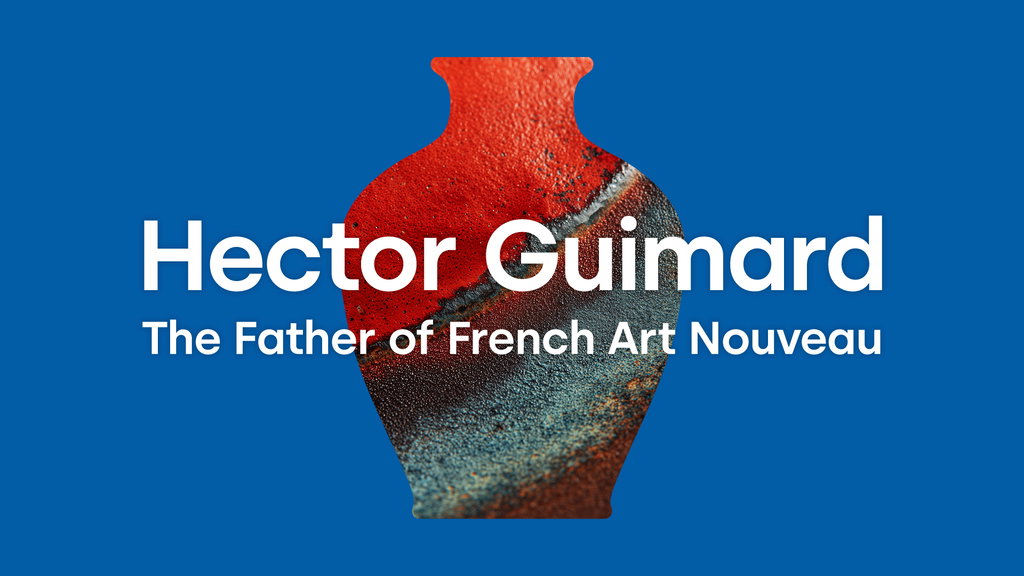
Hector Guimard - The Father of French Art Nouveau
In this episode we travel to France to meet the father of French Art Nouveau and the sweeping organic forms that came to define one of the most exciting eras in European culture. But this time we aren’t talking pots or figures – but tiles - the other major force in ceramic culture.
View episode