Secret Formula - The Race for Porcelain (Part 2)
How did an alchemist discover the recipe for porcelain? And why did his discovery ultimately drive him mad? Join Paul Greenhalgh and Stephanie Rozene as they pick up the story of Europe’s obsession with porcelain and the race to discover its secret formula. Stranger than fiction, this is another great story in the history of ceramics.
Ceramics and artwork in this week’s episode include:
King Augustus II the Strong, 1670–1733
Johann Friedrich Böttger, 1682–1719
Friedrich Zorn, 1711–89
King Frederick I of Prussia, 1657–1713
Ehrenfried Walther von Tschirnhaus, 1651–1708
Plate, Circa 1730–35, Meissen Manufactory Courtesy of The Met Collection
Vase with cover, 1725, Meissen Manufactory Courtesy of The Met Collection
Vase, 1710 –13, Meissen Manufactory Courtesy of The Met Collection
Tea caddy, 1710 –13, Meissen Manufactory
Professor Paul Greenhalgh is a specialist on the art and design of the Modern period. He has written widely on Art Nouveau and curated several exhibitions including the major survey Art Nouveau 1890-1914, which toured internationally (2000-01). His books include Ephemeral Vistas (1988), Modernism in Design (1990), Art Nouveau 1890–1914 (2000), The Modern Ideal (2005), Fair World (2011), L’Art Nouveau: La Revolution Decorative (2013), Ceramic Art and Civilisation (2021) and Pablo Picasso: The Legacy of Youth (2022). He has held positions as Head of Research at the V&A Museum, London; President and Director at the Corcoran Gallery of Art, Washington DC; Director of the Sainsbury Centre, Norwich; and Inaugural Director of the Zaha Hadid Foundation, London. He was born and raised in Bolton, and is a proud Lancastrian.
Stephanie Rozene is a ceramic artist, Professor of Art, and the Ceramics Program Coordinator at Hartwick College in Oneonta, New York she has been teaching, writing and making art since 2004. At Hartwick she's been honored with the Wandersee Scholar in Residence award twice, along with the Teacher Scholar Award. Stephanie's research uses historical ornament and porcelain as a visual language to critique contemporary political rhetoric, and she also explores the history of clay as a cooking tool. Her work has been shown extensively both nationally and internationally. She is a member of the International Academy of Ceramics and is the Vice President of the board of trustees for the Watershed Center for Ceramic Arts in Newcastle, Maine, and was educated at NSCAD University in Nova Scotia, Canada and the New York State College of Ceramics at Alfred University.
More episodes
More episodes
56.22
Sèvres - Power, Porcelain & Prestige
In this episode Paul and Stephanie discuss how Louis XV and Madame de Pompadour, and Louis XVI and Marie Antoinette's passion for porcelain created one of the most famous and revered names in the history of ceramics, Sèvres.
51:34
Josiah Wedgwood - Part 1
In the next two episodes Paul Greenhalgh is joined by Sir Tristram Hunt as they travel back to 18th century England and the life and work of Josiah Wedgwood - potter, scientist and abolitionist and creator of one of the most famous ceramic companies in British history.
45.11
Josiah Wedgwood - Part 2
In this episode Paul Greenhalgh is joined by Sir Tristram Hunt for the 2nd part about the life and work of Josiah Wedgwood - creator of one of the most famous ceramic companies in British history.
51:34
Josiah Wedgwood - Part 1
In the next two episodes Paul Greenhalgh is joined by Sir Tristram Hunt as they travel back to 18th century England and the life and work of Josiah Wedgwood - potter, scientist and abolitionist and creator of one of the most famous ceramic companies in British history.
View episode
1.04.20
Hector Guimard - The Father of French Art Nouveau
In this episode we travel to France to meet the father of French Art Nouveau and the sweeping organic forms that came to define one of the most exciting eras in European culture. But this time we aren’t talking pots or figures – but tiles - the other major force in ceramic culture.
View episode
53:06
George E. Ohr - The Mad Potter
Paul Greenhalgh and Stephanie Rozene travel to the American South at the end the nineteenth century to explore the life and work of George E Ohr - otherwise known as the Mad Potter of Biloxi. Overlooked for much of his life, this eccentric character worked tirelessly creating innovative, wild and exquisitely crafted art pottery. He was a renowned showman using slogans, banners and sales gimmicks to market his wares and was the self proclaimed "world's best art-potter".
View episode
44.43
The Terracotta Warriors
This week on The History of Ceramics, we uncover the extraordinary story of the Terracotta Warriors—thousands of life-sized clay soldiers created over 2,000 years ago to guard the tomb of Qin Shi Huang. From one of history's greatest archaeological discoveries to the remarkable craftsmanship behind this vast underground army, we explore how these silent guardians reveal the power, ambition, and artistic achievements of ancient China. Join Stephanie Rozene and Paul Greenhalgh as they discover why the Terracotta Warriors remain one of the greatest ceramic masterpieces ever created.
View episode
50:43
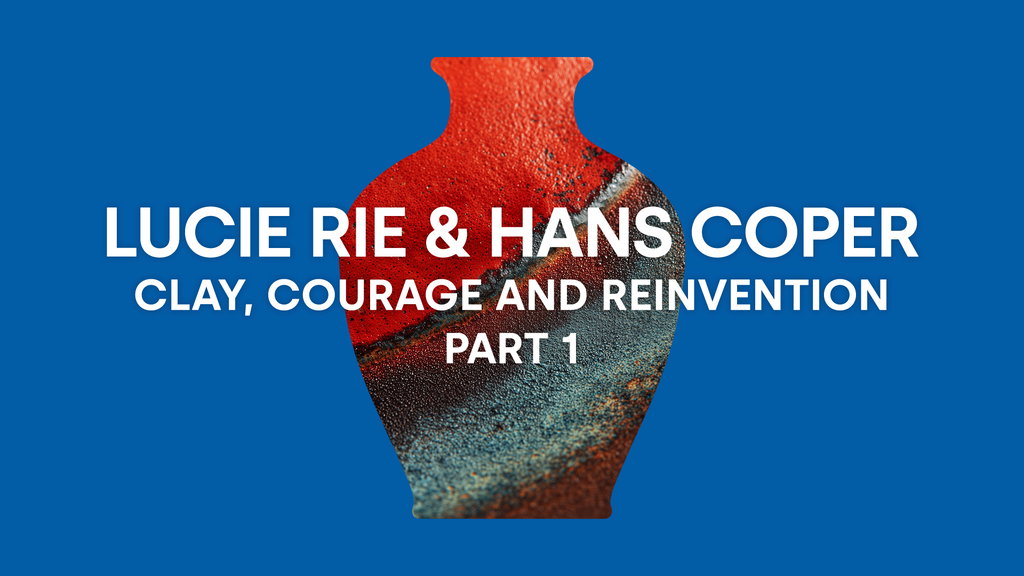
Lucie Rie & Hans Coper - Clay, Courage and Reinvention - Part 1
This week on The History of Ceramics, we explore the extraordinary life of Lucie Rie. Forced to flee Vienna in 1938, Rie rebuilt her life in London and became one of the most influential ceramic artists of the twentieth century. We trace her journey from refugee to pioneer, discovering how her elegant forms, innovative glazes, and uncompromising vision transformed modern studio pottery. Join Stephanie Rozene and Paul Greenhalgh as they uncover the remarkable story of Lucie Rie—and how one artist changed the history of ceramics.
View episode