19 FEBRUARY–2 MARCH
Damien Hirst
ICA Spin Stools
ICA Spin Stools
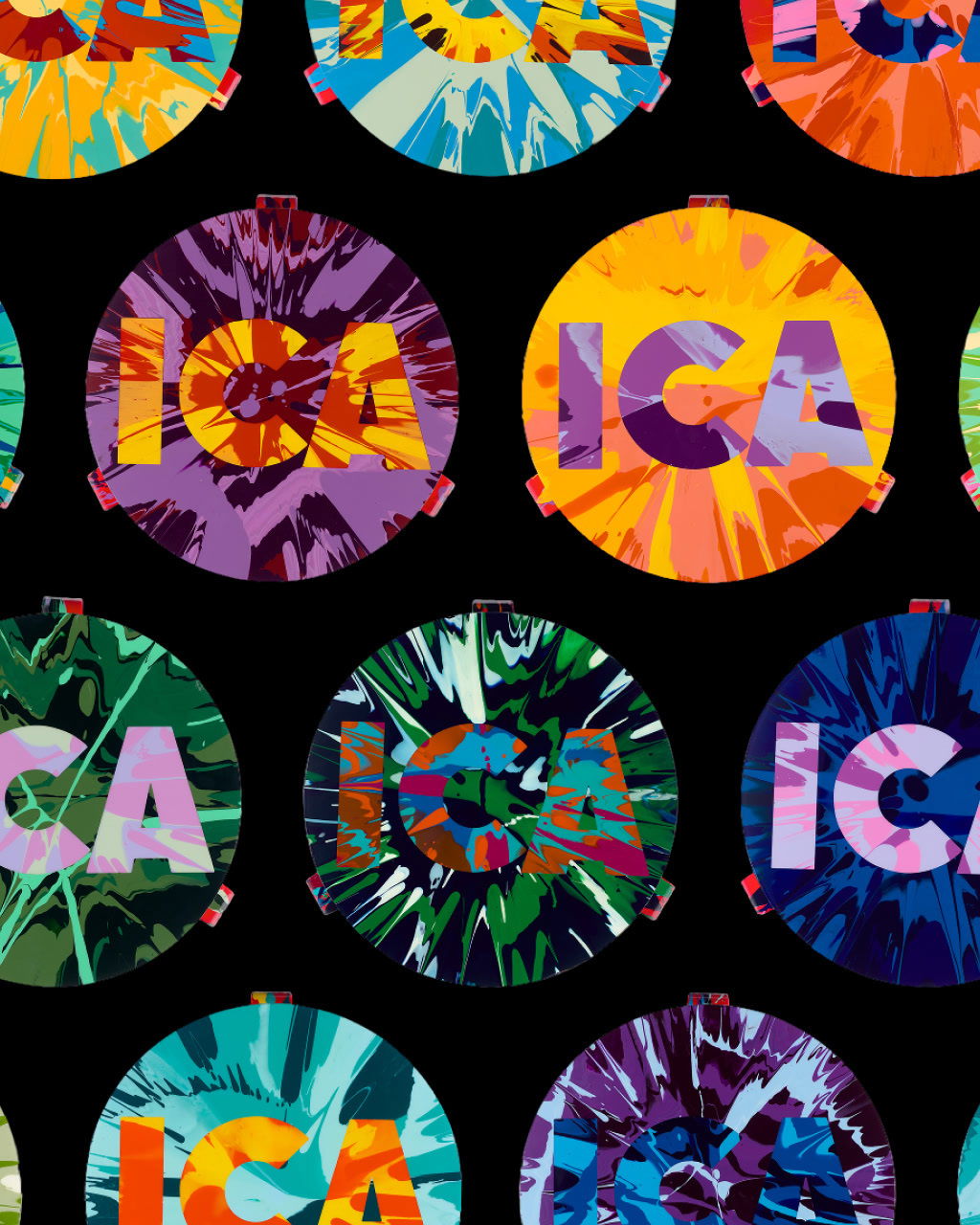
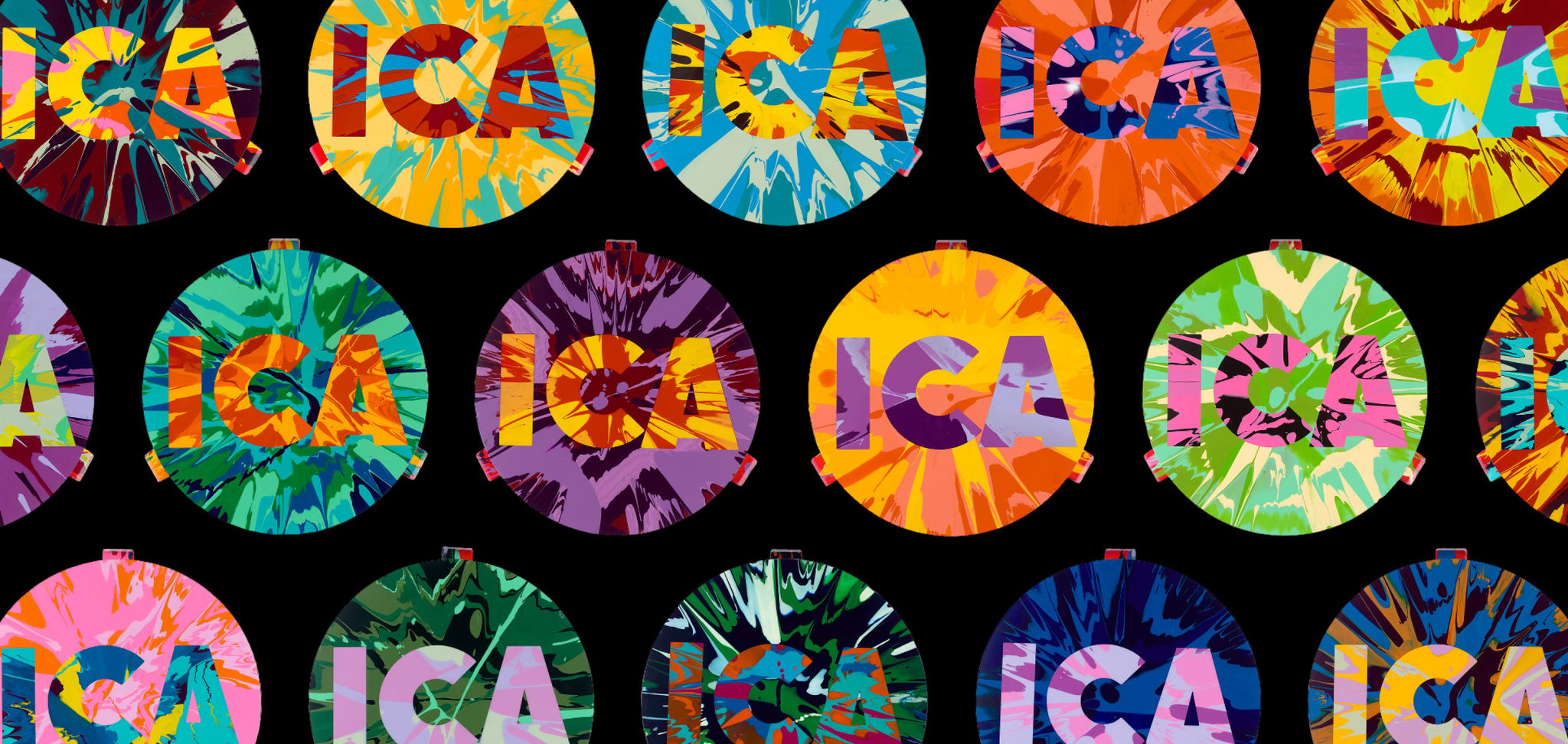
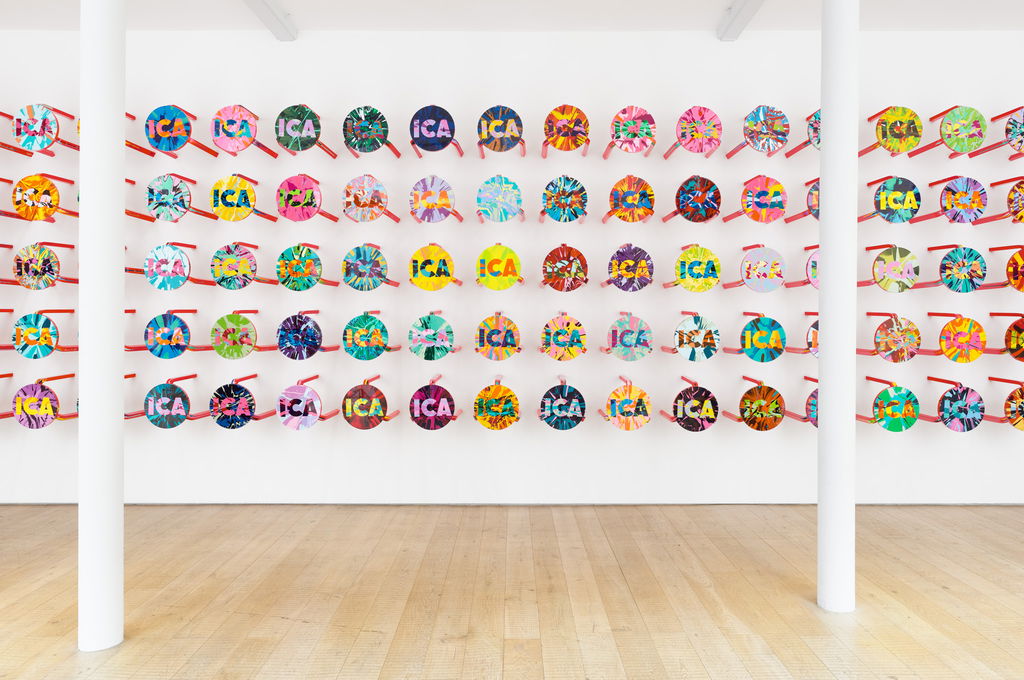
HENI and the Institute of Contemporary Arts are delighted to announce a special collaboration between Damien Hirst and the ICA, ICA Spin Stools – 200 unique works that celebrate both Hirst’s striking Spin Paintings series and his long-established relationship with the ICA, where Hirst's first institutional solo exhibition opened in 1991. The works are on display at HENI Gallery from 19 February–2 March 2026.
ICA Spin Stools is an homage to Damien Hirst’s first institutional solo exhibition Internal Affairs, which opened at the ICA in 1991 and included some of his most personal and defining works. The exhibition signalled the backing of Hirst’s rising career by the institutional art world, and showcased his expanding repertoire of motifs, including a floating ping-pong ball, medical instruments, butterflies and vitrines.
In the following year, Hirst began experimenting in a new, expressionist style of painting, marking the emergence of his Spin Paintings. Rather than creating a composition directly through his brush, Hirst began pouring paint onto his canvases as they spun, allowing the machine to facilitate chance movements and colour interactions.
The stools are currently available by application on HENI Primary until 17:00 GMT on 2 March 2026.
For each artwork sold, $2,000 USD will be donated to Institute of Contemporary Arts Limited, a registered charity in England and Wales with charity number: 236848. The donation will go towards supporting future exhibitions, events and learning programmes at the ICA.
Exhibition Details
Damien Hirst: ICA Spin Stools
Exhibition dates: 19 February–2 March 2026
Opening hours: Monday to Friday, 10am–6pm
Address: HENI Gallery, 6–10 Lexington Street, London W1F 0LB
Admission: Free entry
About Damien Hirst
Damien Hirst is a British artist whose name has become synonymous with contemporary art. Since his generative work as a student at Goldsmiths School of Art, Hirst's production has been boundary−redefining in nature. Working primarily in installation, painting, sculpture and drawing, Hirst explores the complex relationships between art, beauty, religion, science, life and death. He constantly returns to his foundational interests and themes, which he reworks to develop an innovative visual language.