The elusive street artist Invader uses his now ubiquitous pixelated characters to unpretentiously bring art to the masses. Self-described as an Unidentified Free Artist (UFA) whose identity is perennially hidden behind masks and digital pixelations, his pseudonym reflects his artistic practice – to invade (often illegally) international spaces with viral art.

Interested in Invader?
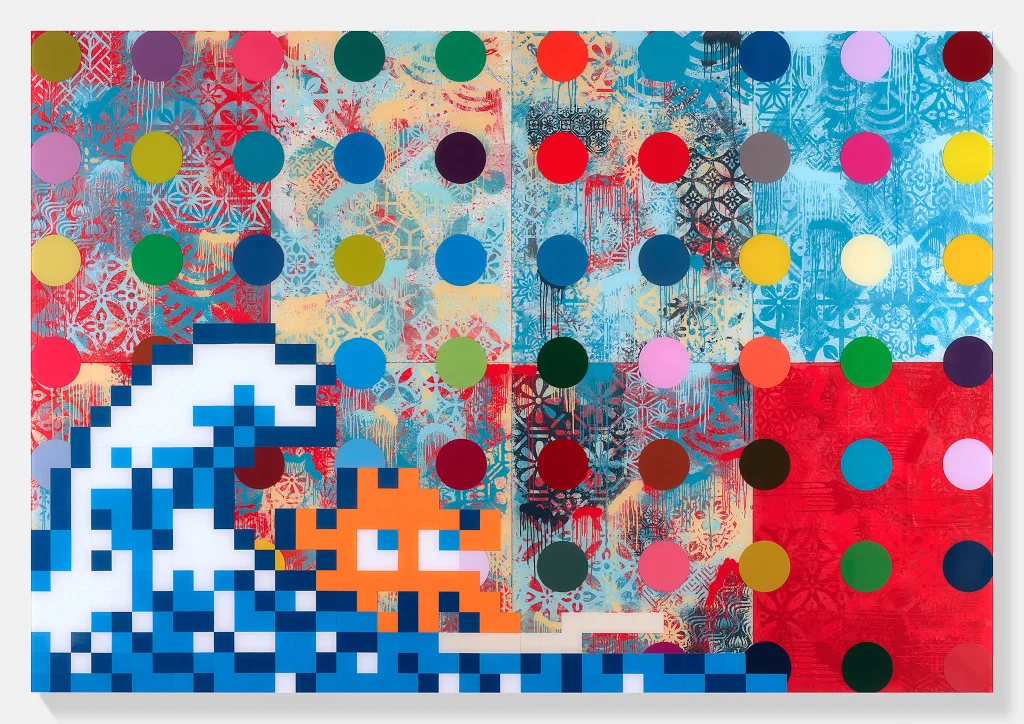
Troubled Waters
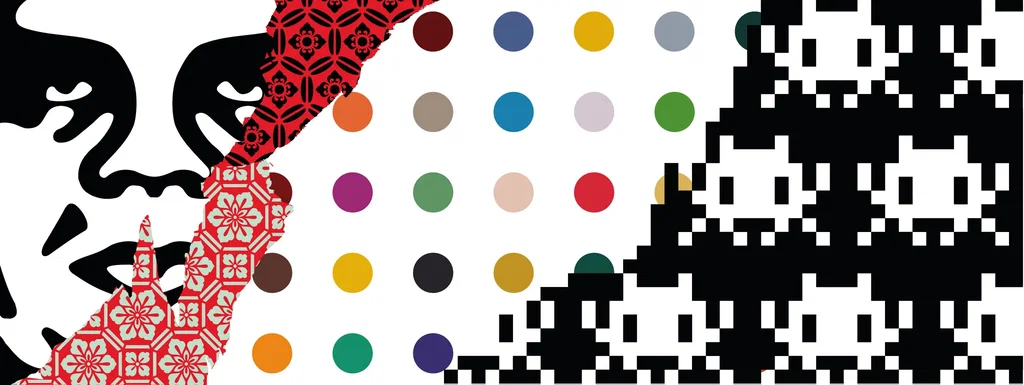
Troubled Waters is a limited-edition print by Shepard Fairey, Damien Hirst and Invader. The print is based on an original painting by all three artists that was recently on view at the Triple Trouble exhibition at Newport Street Gallery.
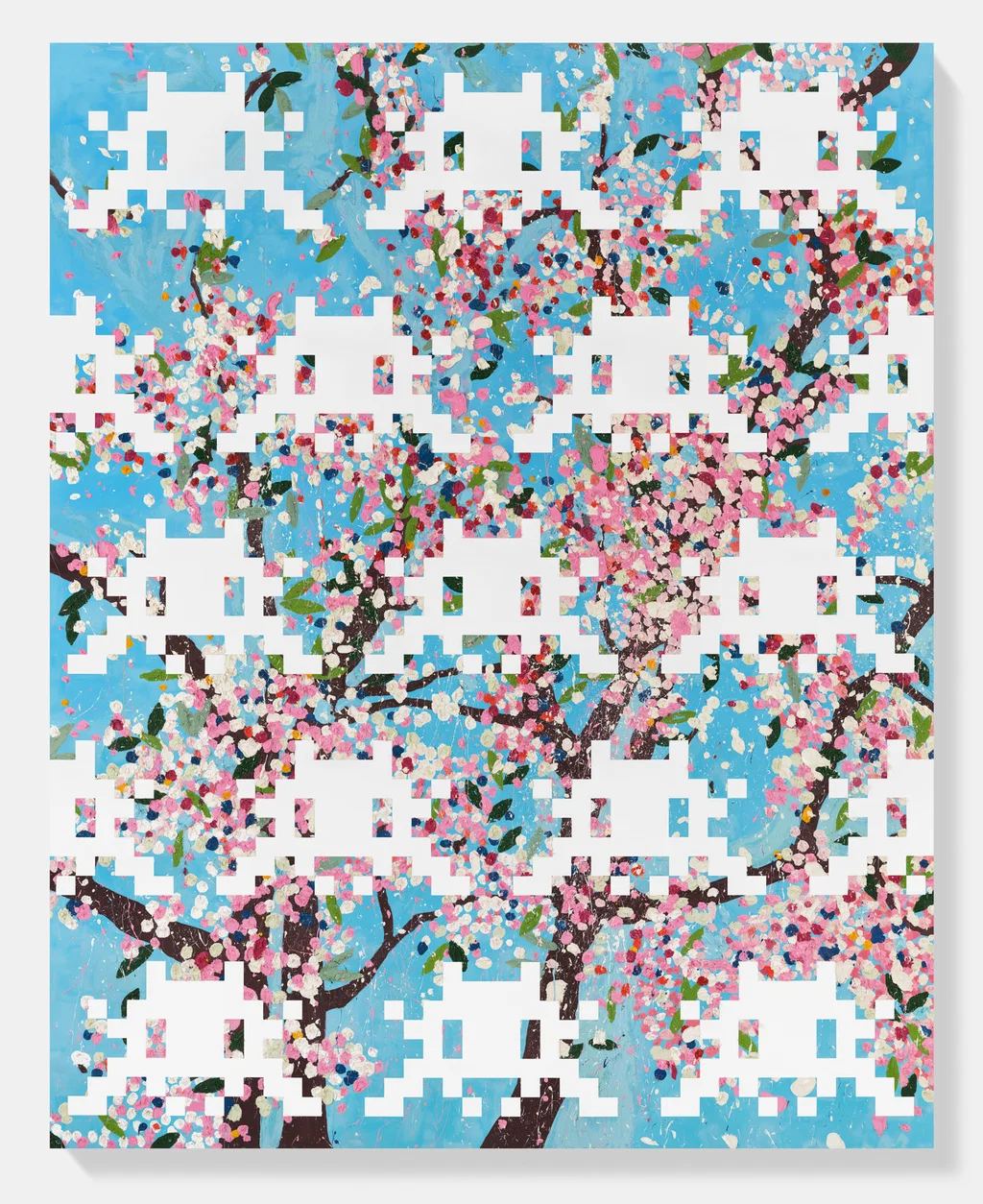
Invaded & Commanded Blossom
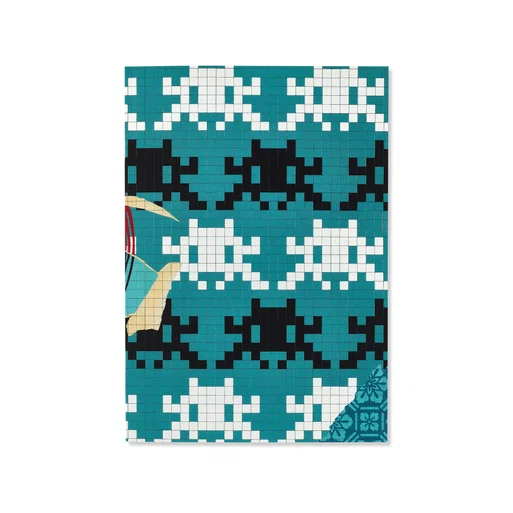
In the Invaded & Commanded Blossom prints, Invader and Fairey overlay Hirst’s cherry blossoms with Space Invaders and the Obey Icon motif.
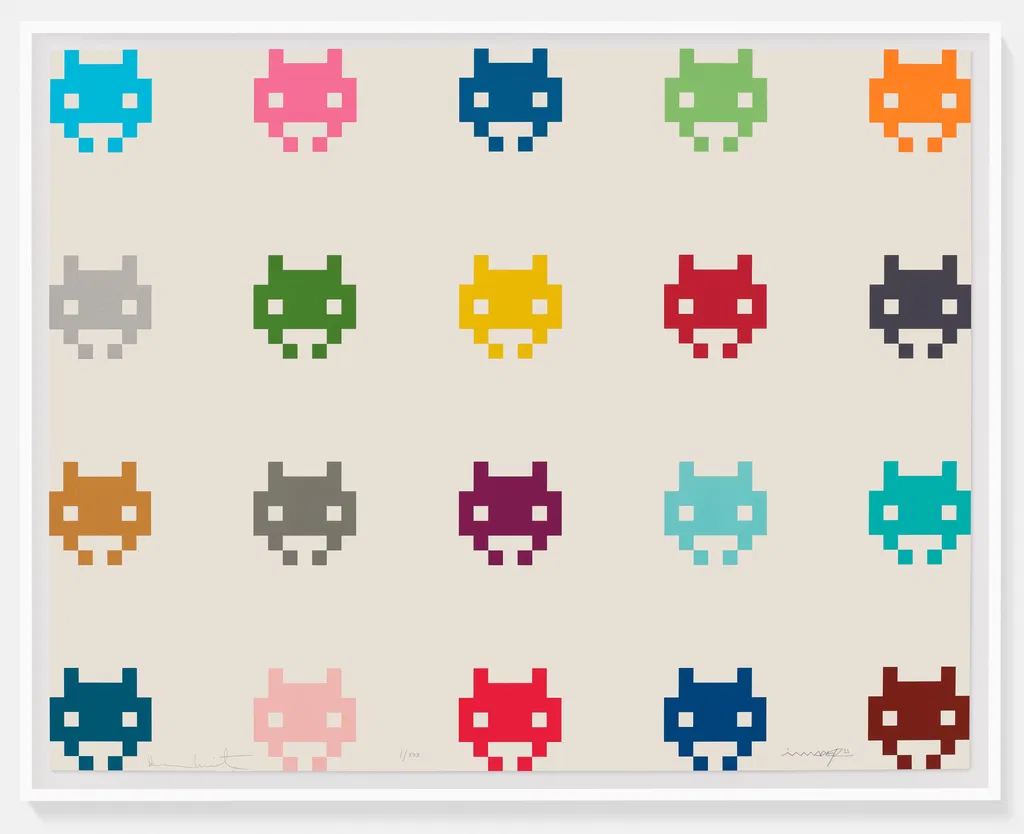
InvadHirst
InvadHirst is a limited-edition print by Damien Hirst and Invader. The print is based on a new work currently on view at the Triple Trouble exhibition at Newport Street Gallery.
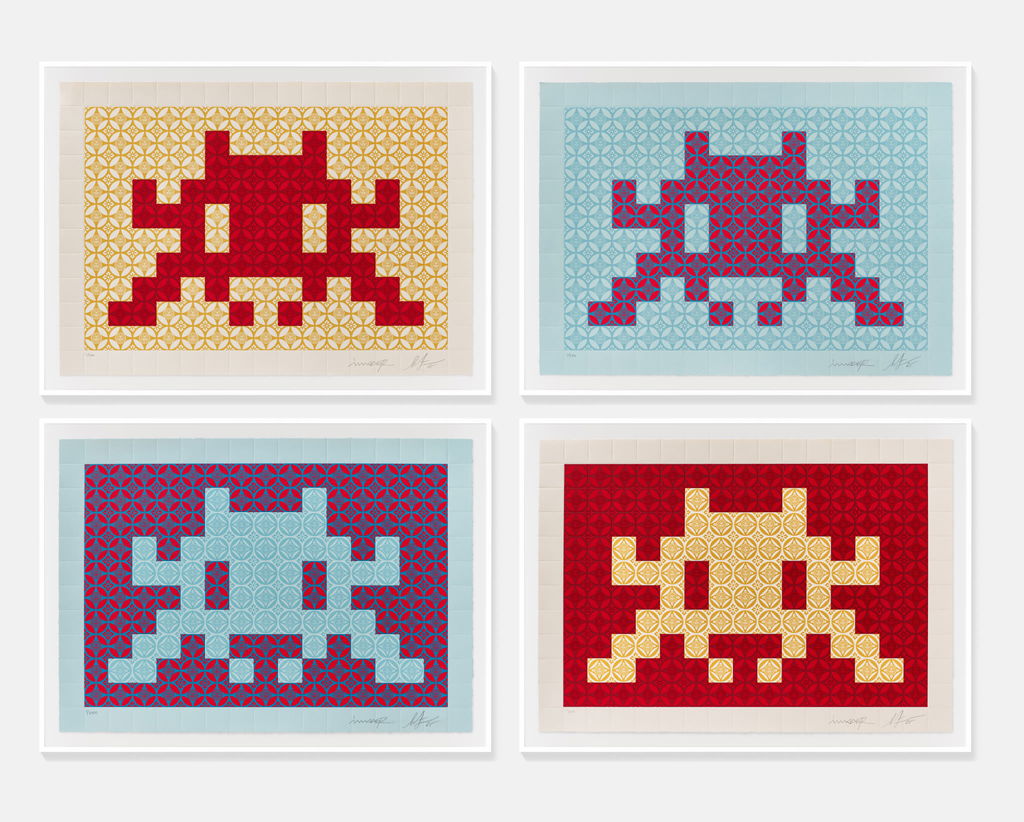
Obey Invader
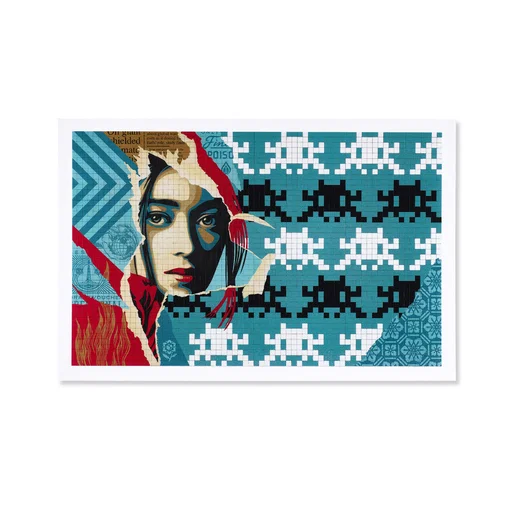
Obey Invader is a series of four limited-edition prints by Shepard Fairey and Invader. The prints are based on new works currently on view at the Triple Trouble exhibition at Newport Street Gallery, which runs from 10 October until 29 March 2026.

Camouflage
Camouflage by Invader features 21 unique screenprint editions on Somerset Satin Cotton set within an aluminium frame, split across five sizes. Begun in 2023, the Camouflage series shows the artist’s famed Space Invader figure hidden amongst camouflage patterns.
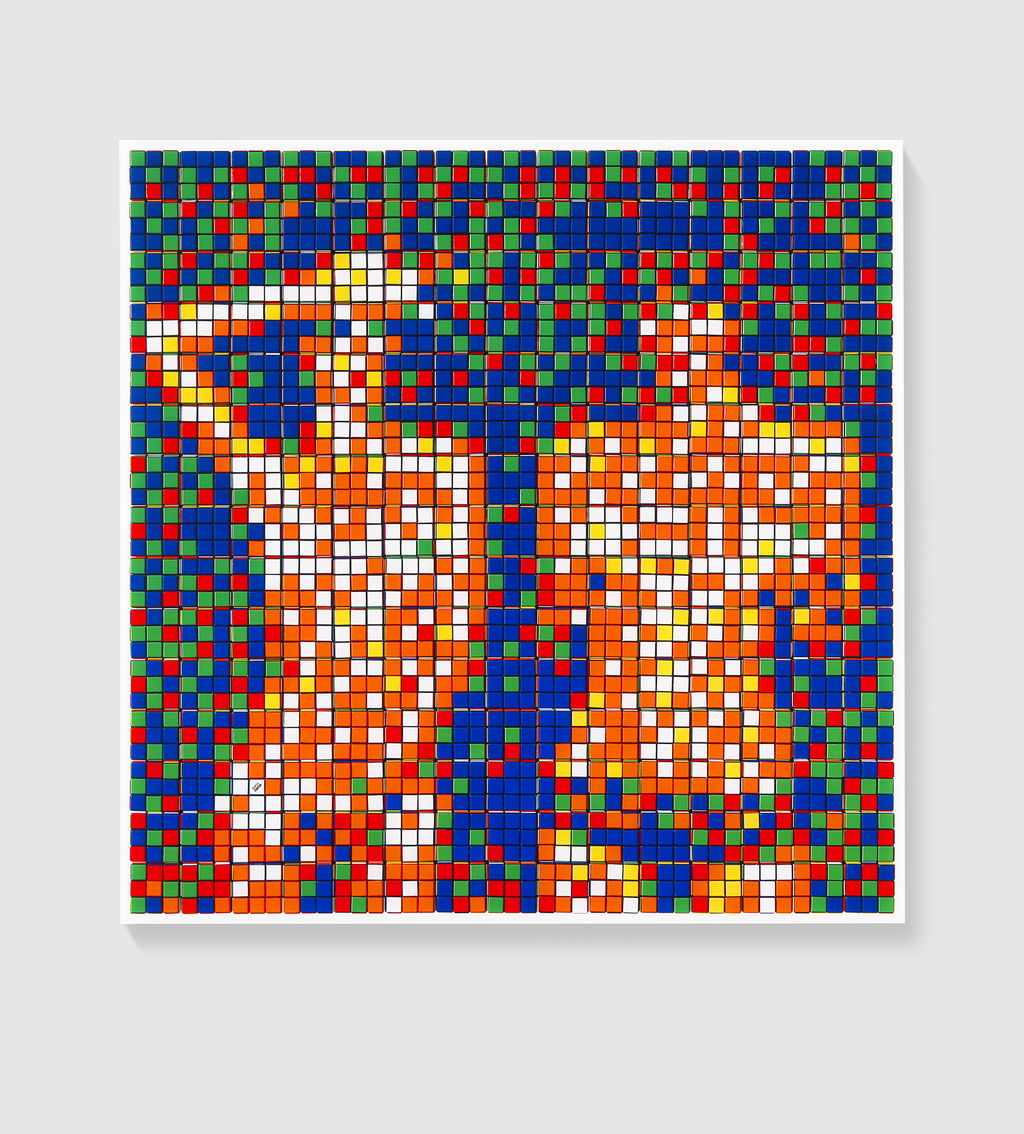
Rubikcubism
HENI Editions is delighted to present Rubikcubism by Invader. The drop features four colour-filled prints from Invader’s acclaimed series of artworks using Rubik’s Cubes.
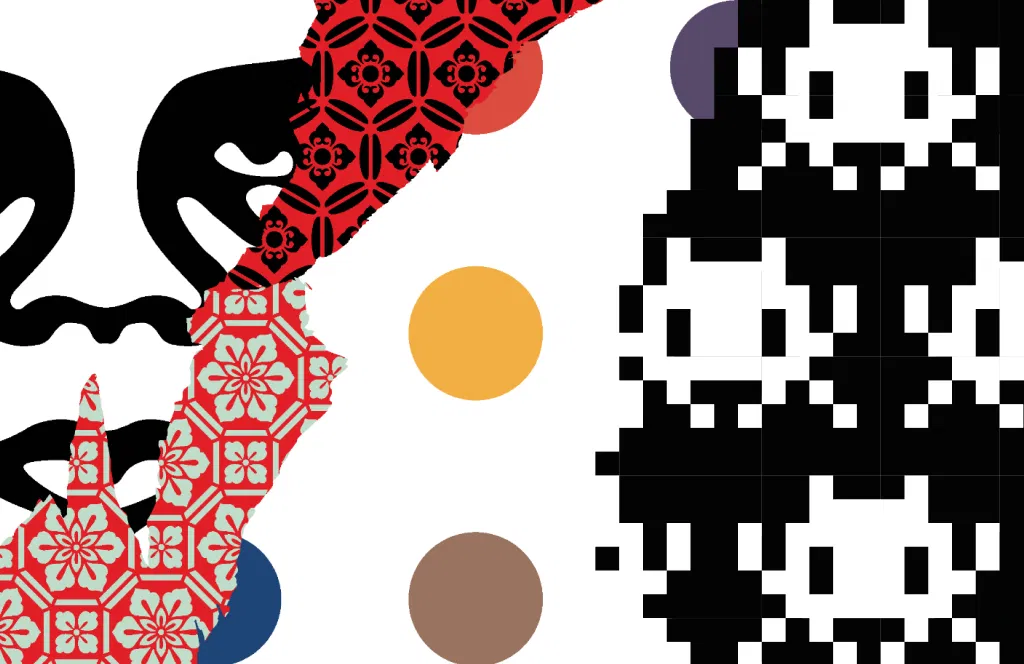
Triple Trouble
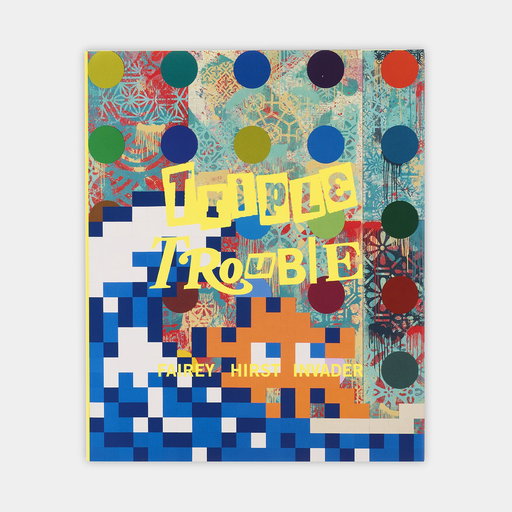
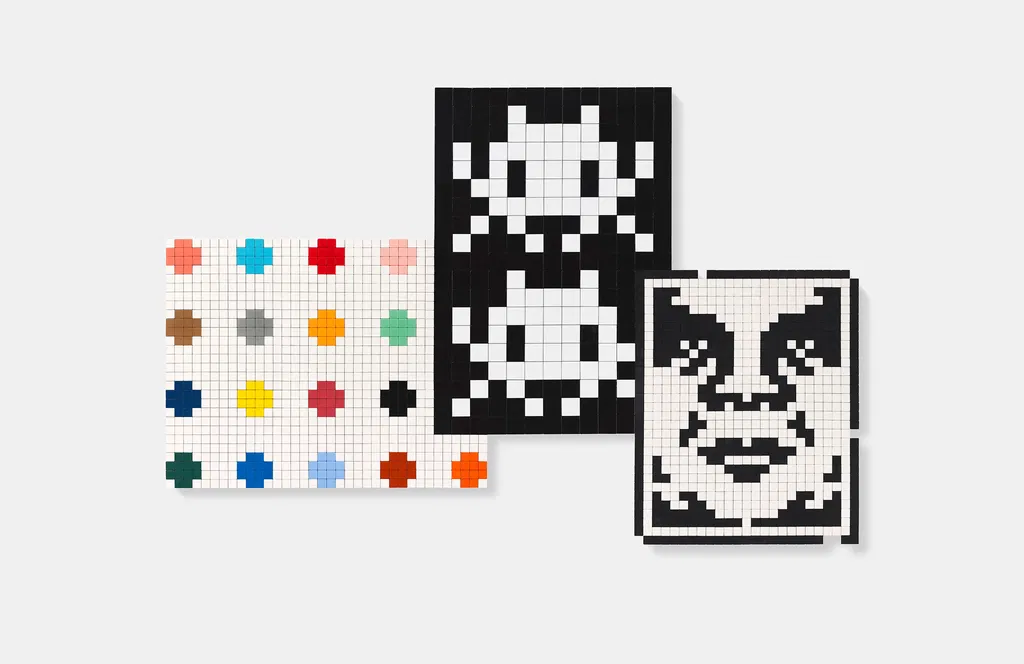
Triple Trouble is a collection of new collaborative works by three disruptive artists: Shepard Fairey, Damien Hirst and Invader. The collection spans original paintings, sculptures, installations and mosaics.
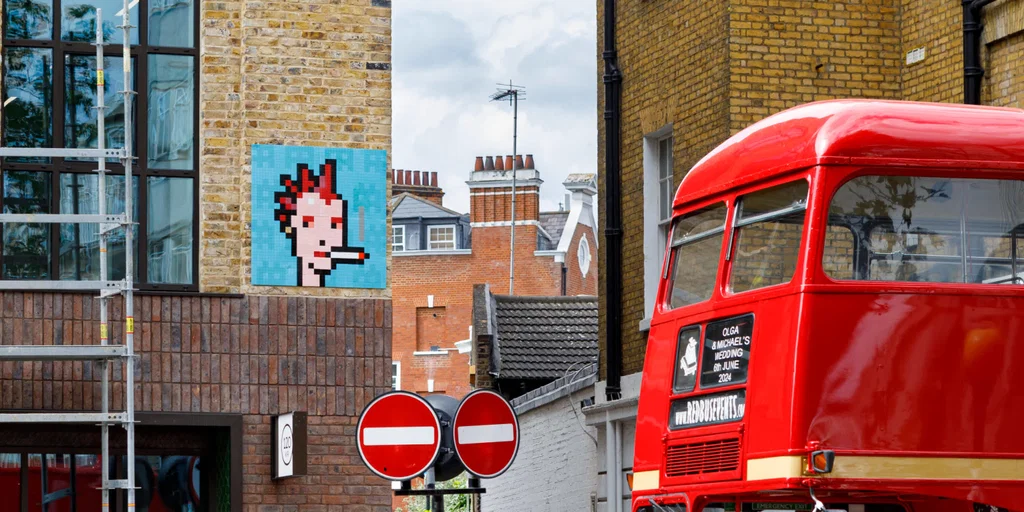
Alias and Pixel Pieces
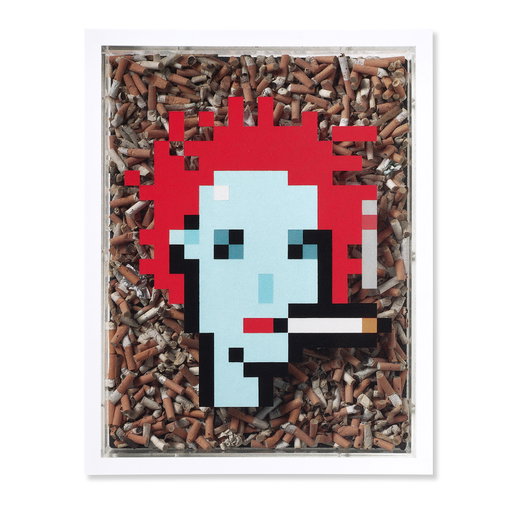
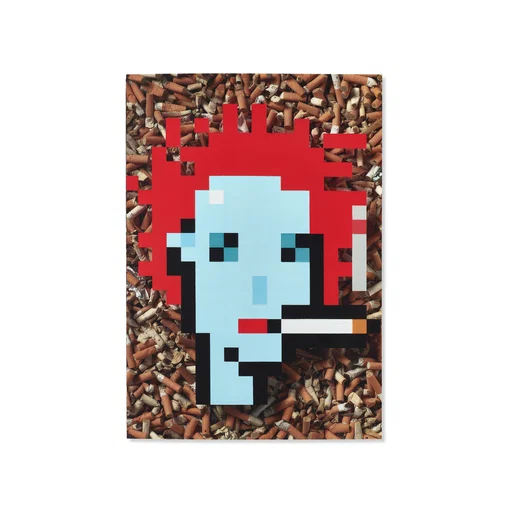
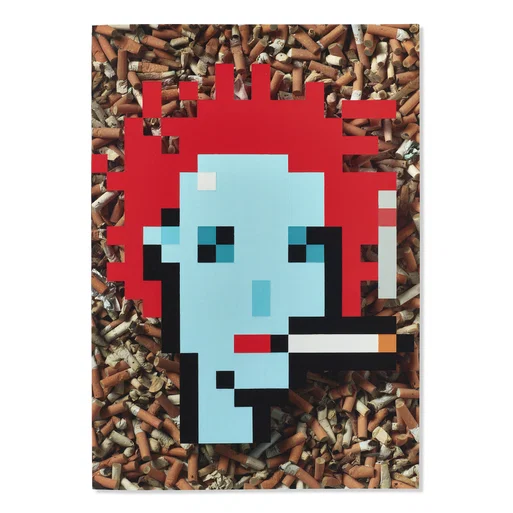
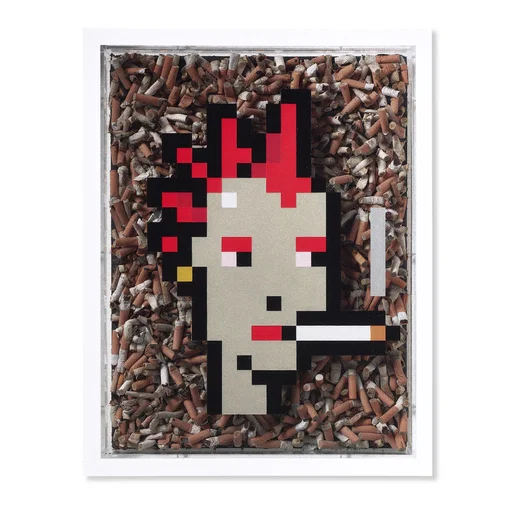
Alias and Pixel Pieces by Invader features 10 unique ceramic artworks.
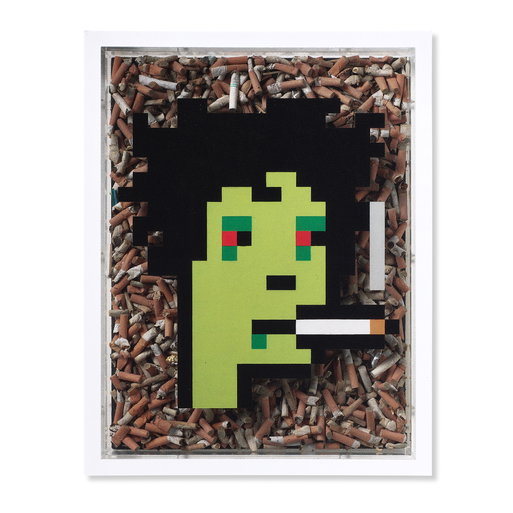



About the Artist
The elusive street artist Invader uses his now ubiquitous pixelated characters to unpretentiously bring art to the masses. Self-described as an Unidentified Free Artist (UFA) whose identity is perennially hidden behind masks and digital pixelations, his pseudonym reflects his artistic practice – to invade (often illegally) international spaces with viral art.
Born in 1969 in France, Invader attended the prestigious École des Beaux-Arts in Paris. After graduating from art school, he struggled to become a professional artist and break into the gallery scene. As such, his art practice – which at the time consisted of painting and ‘experimental stuff’ – was subsidised by his work building websites for small businesses. This work in the early days of the Internet sparked Invader’s interest in pixelations, as did video games: ‘Space Invaders’ (1978) and its iconic 8-bit alien characters provided inspiration for Invader’s own characteristic alien motif.
Invader’s initial attempts to forge his own style and give a physical presence to digital characters began as paintings on canvas but quickly transitioned into mosaics using bathroom tiles, a medium that was instrumental for the development of his pixelated aesthetic. In 1998, Invader started disseminating his creatures across the public space with an alien mosaic, which he jokingly stuck onto a cement wall in Paris, claiming it was the best way for more people to see it. Since then, Invader has transposed his tiled mosaics across the world in his ‘Space Invader’ project, which aims to liberate not only art from alienating environments, but also the Space Invaders from the confines of video games and TV.
Focusing on densely populated urban areas across the globe, Invader brings between 20 to 50 pieces to each location, sometimes returning with more in a new ‘invasion wave’. His mosaics are meticulously placed, often out of reach and where they can attract the most attention. They are also thoughtfully composed, creating work that responds to or is in conversation with the relevant cultures and physical environments. This includes a Hello Kitty in Tokyo, a Spiderman in Paris which hangs upside down from the side of a chimney and the planets of the solar system on the wall of the European Space Agency in Frankfurt.
‘Space Invaders’ spans over 30 countries. It can be found also on the International Space Station (the first artwork to be exhibited in space) and on an installation on the seabed off the coast of Cancún. The discovery of a mosaic by Invader has become akin to a game of Where’s Waldo on an international scale. In fact, Invader has composed ‘Invasion Maps’ for some of the cities he has invaded and has even developed an app which allows its thousands of users to snap mosaics to accumulate points.
Never abandoning his dedication to street art, since 1998 Invader has expanded his practice into new media, delving into Rubik’s Cube sculptures in his acclaimed Rubkicubism series, producing installations and film, and even designing a sneaker which leaves an alien stamp on the ground. Invader has continued to innovate within his characteristic aesthetic, allowing it to evolve as he invents new ways to bring accessible art to the masses.