Mark Wallinger has created some of the most subtly intelligent and influential artworks of the last forty years. Wallinger is known for his career-long engagement with ideas of power, authority, artifice and illusion. Using epic narratives, lyrical metaphors and ardent punning, the artist interleaves the mythological, the political and the everyday.
Interested in Mark Wallinger?
About the Artist
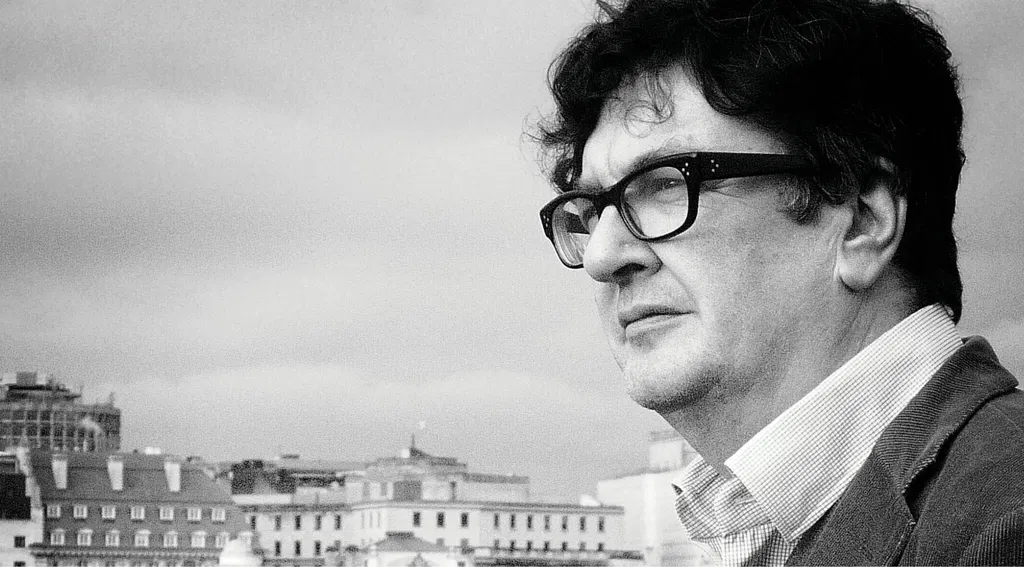
Mark Wallinger (b. Chigwell, UK, 1959) has created some of the most subtly intelligent and influential artworks of the last forty years. Wallinger is known for his career-long engagement with ideas of power, authority, artifice and illusion. Using epic narratives, lyrical metaphors and ardent punning, the artist interleaves the mythological, the political and the everyday.
His work has dealt with religion, nationalism and class, explored urgent social issues, and pondered Einstein’s theory of relativity and Freud’s concepts of the nature of the human mind. A surprising, inventive and profound artist, whose astonishingly multi-faceted work encompasses painting, sculpture, printmaking, photography, film and video, performance and work for the public realm. Maintaining conceptual coherence across media Wallinger poses big questions about identity, and the social, cultural and political power structures that define who we are.
Ecce Homo 1999, a life-sized sculpture of Jesus Christ, was the first work to occupy the empty plinth in Trafalgar Square. Public commissions are central to Wallinger's practice, the most recent being Writ in Water, 2018, a monumental installation to commemorate the sealing of the Magna Carta commissioned by the National Trust for Runnymede, England, and The World Turned Upside Down, 2019, a major sculpture for the London School of Economics. In 2013, Wallinger created Labyrinth, a permanent commission to celebrate the 150th anniversary of the London Underground that spans all 272 stations on the network, with two additional Labyrinth commissions in 2023.
Mark Wallinger is one of the UK’s leading contemporary artists. He represented Britain at the Venice Biennale in 2001 and was awarded the Turner Prize in 2007. His work is part of numerous leading international collections, including Tate, London; MoMA, New York; and Centre Pompidou, Paris.